
A million tokens of context is not the same as a million tokens of output. Google’s new Gemini 4 Argon makes that distinction worth watching. This AI leaderboard now covers its 1M output limit and launch results alongside 182 independently ranked language models from 54 labs in 10 countries, plus coding agents, AI agents, image, video and voice models and decision models.
Pick a tab, rank by the test that matches your work, set a budget and compare up to three models side by side. The Language models tab is a full LLM leaderboard; the other tabs extend the AI leaderboard to agents and media models. Every score links back to where it came from.
| # | Model | Lab | Intelligence | Price in / out per 1M |
|---|---|---|---|---|
| 1 | Claude Opus 5.5 | Anthropic | 57.6 | $4 / $20 |
| 2 | Claude Sonnet 5.5 | Anthropic | 56.0 | $2 / $10 |
| 3 | Claude Fable 5.1 | Anthropic | 53.4 | $10 / $50 |
| 4 | GPT-6 Astra | OpenAI | 52.7 | $10 / $50 |
| 5 | GPT-6.1 Sol | OpenAI | 51.8 | $2 / $10 |
| 6 | Muse Spark 1.3 | Meta | 48.1 | $1.25 / $4.25 |
| 7 | GPT-6 Sol | OpenAI | 47.5 | $2 / $10 |
| 8 | Grok 4.7 | SpaceXAI | 46.4 | $2 / $6 |
| 9 | MiMo-V2.6-Pro | Xiaomi | 46.3 | $0.43 / $0.87 |
| 10 | Qwen3.8 Max (0902) | Alibaba | 45.4 | $2 / $6 |
Gemini 4 Argon: the 1M output limit changes the comparison
The biggest change is how much work a model can carry through before it has to stop. Gemini 4 Argon, announced on 30 September 2026, expands maximum output to 1 million tokens. Google’s previous comparison point was 64K, making the announced budget roughly 15.6 times larger.
The official Google announcement and Google DeepMind’s own follow-up frame that extra room around deeper reasoning through long, multi-step problems. It is not simply another claim about reading a million-token document.
Output tokens, context and speed are three different things
- Context window: the working space a request can use for material such as instructions, documents and conversation, subject to the provider’s input and output rules.
- Maximum output: the generation budget. Google links Argon’s bigger limit to both thinking and generating along a single trajectory. That does not mean every response will contain a million tokens of visible prose.
- Output speed: how quickly tokens arrive, measured in tokens per second. A larger output cap does not establish a faster model.
| Model | Maximum output tokens | Context window | Availability / scope | Source |
|---|---|---|---|---|
| Gemini 4 Argon | 1,000,000 | Not separately specified in the launch announcement | Initial Fairwind cohort | Google launch |
| GPT-6.1 Sol | 128,000 | 1,050,000 | Documented standard API limit | Official specs |
| GPT-6 Astra | 128,000 | 1,050,000 | Documented standard API limit | Official specs |
| Claude Sonnet 5.5 | 128,000 | 1,000,000 | Documented standard API limit | Official specs |
| Claude Opus 5.5 | 128,000 | 1,000,000 | Documented standard API limit | Official specs |
| Claude Fable 5.1 | 128,000 | 1,000,000 | Documented standard API limit | Official specs |
Against the documented 128,000-token output cap on GPT-6.1 Sol and GPT-6 Astra, Argon’s announced cap is about 7.8 times larger. That compares capacity, not answer quality or elapsed time. We have not filled in an Argon context ceiling from its GraphWalks benchmark: a test over documents up to 1M tokens is not a published API specification.
Why we think it matters for finance and coding
For finance, the interesting possibility is a workflow that has to reconcile several schedules, trace discrepancies back to documents and prepare a clear explanation without losing track of the earlier steps. For coding, it is a longer sequence of inspecting files, changing code, running tests and fixing what fails. A higher cap may remove one stopping point in those jobs. It does not remove the need for good source data, checks or a reviewer.
Our view: output headroom deserves a place beside benchmark score, price and speed when choosing a model for substantial work. It matters much less for a short email or a simple formula. We would not pay for a lengthy run where a smaller, cheaper model already does the job properly.
What the launch tests show, including where rivals win
On Google’s official performance table, Argon leads these rivals in finance-agent work, business automation and DeepSWE. It does not sweep coding: Astra leads FrontierSWE v2 in this comparison, while Opus 5.5 leads Terminal-Bench 4.0. Astra also leads Terminal-Bench Science 0.1.
| Benchmark | Gemini 4 Argon | GPT-6 Astra | Claude Fable 5.1 | Claude Opus 5.5 |
|---|---|---|---|---|
| Vals Index | 68.9% | 63.1% | 65.8% | 67.0% |
| AutomationBench | 51.3% | 41.4% | 31.4% | 42.5% |
| Vals Finance Agent v2 | 65.4% | 53.5% | 58.9% | 58.6% |
| DeepSWE v1.1 | 77.9% | 74.1% | 67.4% | 74.2% |
| FrontierSWE v2 | 55.0% | 65.5% | 56.3% | 62.3% |
| Terminal-Bench 4.0 | 57.4% | 58.2% | 57.9% | 66.4% |
| Terminal-Bench Science 0.1 | 57.6% | 68.1% | 52.6% | 63.3% |
The evaluation methodology describes Gemini runs at the highest thinking setting unless noted otherwise. Rival figures generally come from providers’ own reported results, with exceptions explained for individual tests. This is useful launch evidence, but it is not a uniform independent rerun. We keep it separate from the Artificial Analysis, Arena and Terminal-Bench rankings above.
For all 19 launch benchmark rows, the safety results and more worked examples, read our full Gemini 4 Argon guide.
Gemini 4 Argon pricing: the introductory rate is not permanent
| Period | Input per 1M | Output per 1M | Cached input per 1M |
|---|---|---|---|
| Introductory | $2 | $10 | $0.1 (calculated from 95% off) |
| After the introductory period | $4 | $20 | Not separately stated in the launch footnote |
As a simple illustration, 1 million billed output tokens would cost $10 at the introductory output rate, or $20 afterward, before any input or other applicable charges. That is a price calculation, not a measured cost per task. A model that takes a longer route can spend more even when its per-token price looks attractive.
Who gets Gemini 4 Argon first?
Initial access is for a cohort of cyber defenders through Fairwind. Google’s official reply about availability explains that feedback and guardrail work come before broader access. The launch blog names paid API customers and Google AI Ultra subscribers as the starting point for the wider rollout, but gives no firm general-release date. Do not assume a free Gemini account or a Jio promotion already includes Argon.
Where it sits on this AI leaderboard: visible as an announced model, not assigned an invented first-place score. The independent rankings remain the 30 September 2026 snapshot. We will place Argon in the appropriate ranked tables when comparable independent results are available.
AI leaderboard: the top models right now
Claude Opus 5.5 from Anthropic leads the independently ranked models in our 30 September 2026 snapshot, with 57.6 on the Artificial Analysis Intelligence Index. Claude Sonnet 5.5 (Anthropic) is second on 56.0 and Claude Fable 5.1 (Anthropic) third on 53.4. Anthropic holds all three podium places.
The Intelligence Index blends ten tests covering agents, coding, scientific reasoning and general knowledge into one score out of 100, so it rewards all-round ability. A model that is weaker overall can still lead on the one skill you need, which is why the leaderboard above lets you rank by each test on its own.
Rankings move quickly. 9 of the top 25 were released in the last two weeks: Claude Opus 5.5, Claude Sonnet 5.5, GPT-6.1 Sol, GPT-6 Sol, Grok 4.7, MiMo-V2.6-Pro, Step 5 Preview, MiMo-V2.6-Flash, GPT-6 Luna. New models can also be missing a test or two for a few days, which is why some cells show n/a.
The top 25 AI models compared
This table is the top of the AI leaderboard in plain form: our AI model rankings by the Intelligence Index. Use it for a quick scan. Use the interactive version above to re-rank by any test, filter by price or country, or see every effort setting of a model.
| # | Model | Lab | Intelligence | Coding | Knowledge work | People’s vote | Price in / out | Speed (tok/s) |
|---|---|---|---|---|---|---|---|---|
| 1 | Claude Opus 5.5 new | Anthropic US | 57.6 | 59.6% | 1846 | 1509 | $4 / $20 | 92 |
| 2 | Claude Sonnet 5.5 new | Anthropic US | 56.0 | 63.6% | 1844 | n/a | $2 / $10 | 139 |
| 3 | Claude Fable 5.1 | Anthropic US | 53.4 | 52.0% | 1735 | 1501 | $10 / $50 | 69 |
| 4 | GPT-6 Astra | OpenAI US | 52.7 | 59.1% | 1542 | 1478 | $10 / $50 | 55 |
| 5 | GPT-6.1 Sol new | OpenAI US | 51.8 | 56.1% | 1575 | n/a | $2 / $10 | 69 |
| 6 | Muse Spark 1.3 | Meta US | 48.1 | 33.3% | 1672 | 1494 | $1.25 / $4.25 | 181 |
| 7 | GPT-6 Sol new | OpenAI US | 47.5 | 43.9% | 1487 | 1457 | $2 / $10 | 76 |
| 8 | Grok 4.7 new | SpaceXAI US | 46.4 | 25.8% | 1695 | 1439 | $2 / $6 | 77 |
| 9 | MiMo-V2.6-Pro open weights new | Xiaomi CN | 46.3 | 34.8% | 1678 | 1480 | $0.43 / $0.87 | 41 |
| 10 | Qwen3.8 Max (0902) | Alibaba CN | 45.4 | 38.9% | 1663 | 1479 | $2 / $6 | 39 |
| 11 | GLM-5.3 open weights | Z AI CN | 44.8 | 41.9% | 1644 | 1480 | $1.4 / $4.4 | 71 |
| 12 | Step 5 Preview new | StepFun CN | 43.7 | 33.3% | 1566 | n/a | $1 / $2.7 | 85 |
| 13 | Kimi K3 open weights | Kimi CN | 43.6 | 12.6% | 1524 | 1488 | $3 / $15 | 36 |
| 14 | GPT-5.6 Terra | OpenAI US | 42.1 | 35.4% | 1432 | 1465 | $2 / $12 | 93 |
| 15 | GLM 5.3 Flash open weights | Z AI CN | 41.8 | 32.8% | 1641 | 1474 | $0.15 / $0.5 | 45 |
| 16 | Gemini 3.8 Flash | Google US | 40.9 | 19.7% | 1412 | 1492 | $0.75 / $3.75 | 242 |
| 17 | Qwen3.8 2.4T A95B open weights | Alibaba CN | 39.9 | 11.1% | 1597 | n/a | $2 / $6 | 39 |
| 18 | Qwen3.8-Flash-Next open weights | Alibaba CN | 39.8 | 25.3% | 1612 | n/a | $0.15 / $0.47 | 58 |
| 19 | DeepSeek V4.1 Flash open weights | DeepSeek CN | 39.5 | 26.8% | 1600 | 1477 | $0.3 / $1.2 | 209 |
| 20 | MiMo-V2.6-Flash open weights new | Xiaomi CN | 37.9 | 22.7% | 1600 | 1454 | $0.14 / $0.28 | 57 |
| 21 | GPT-6 Luna new | OpenAI US | 37.3 | 12.6% | 1367 | 1442 | $0.1 / $0.5 | 145 |
| 22 | DeepSeek V4 Pro 0813 open weights | DeepSeek CN | 36.0 | 14.1% | 1441 | 1464 | $1.32 / $3.96 | 81 |
| 23 | DeepSeek V4 Flash Vision | DeepSeek CN | 34.8 | 12.1% | 1534 | n/a | $0.44 / $1.32 | 216 |
| 24 | JT-4.1 Flash 236B A21B | China Mobile CN | 33.9 | 3.0% | 1316 | n/a | n/a / n/a | n/a |
| 25 | Qwen3.8 27B open weights | Alibaba CN | 33.7 | 5.6% | 1409 | 1438 | $0.5 / $3 | 44 |
How to read the gaps: Artificial Analysis estimates the 95% confidence interval of its index at less than ±1%, so models a fraction of a point apart are effectively tied. Single tests carry wider error bars, and a model that leads one test by two points has not necessarily proved it is better at that skill.
Best AI model for each job
Most teams do not need the best model overall. They need the best model for one kind of work at a price they can live with. The table shows the leader and runner-up on each test in this AI leaderboard.
| Job | Leader | Score | Runner-up | Test |
|---|---|---|---|---|
| Coding | Claude Sonnet 5.5 Anthropic | 63.6% | Claude Opus 5.5 (59.6%) | Terminal-Bench 4.0 |
| Knowledge work | Claude Opus 5.5 Anthropic | 1846 | Claude Sonnet 5.5 (1844) | GDPval-AA Elo |
| Long projects | Claude Opus 5.5 Anthropic | 1822 | Claude Sonnet 5.5 (1811) | AA-Briefcase Elo |
| Business automation | Claude Sonnet 5.5 Anthropic | 71.3% | Claude Opus 5.5 (69.5%) | AutomationBench-AA |
| Reading PDFs | GPT-6 Astra OpenAI | 31.0% | GPT-6.1 Sol (31.0%) | GDP.pdf |
| Reasoning | Claude Opus 5.5 Anthropic | 61.4% | Claude Fable 5.1 (59.1%) | Humanity's Last Exam |
| Scientific coding | Claude Opus 5.5 Anthropic | 66.9% | Claude Fable 5.1 (63.1%) | SciCode |
| Long context | Kimi K3 Kimi | 88.7% | Step 5 Preview (88.3%) | AA-LCR |
| Reliable knowledge | Claude Opus 5.5 Anthropic | 46.4 | Claude Fable 5.1 (43.5) | AA-Omniscience Index |
| Vision | Claude Opus 5.5 Anthropic | 87.7% | GPT-6 Astra (86.9%) | MMMU Pro |
| People’s vote | Claude Opus 5.5 Anthropic | 1509 | Claude Fable 5.1 (1501) | LMArena text |
| Web development vote | Claude Opus 5.5 Anthropic | 1820 | GPT-6 Astra (1792) | LMArena WebDev |
| Finance and accounting | Claude Opus 5.5 Anthropic | 60.7 | Claude Sonnet 5.5 (57.2) | AA capability index |
| Legal | Claude Opus 5.5 Anthropic | 63.3 | Claude Fable 5.1 (60.5) | AA capability index |
| Engineering | Claude Opus 5.5 Anthropic | 60.4 | Claude Sonnet 5.5 (58.4) | AA capability index |
| Economics | Claude Opus 5.5 Anthropic | 65.6 | Claude Fable 5.1 (62.7) | AA capability index |
| Strategy and ops | Claude Opus 5.5 Anthropic | 63.7 | Claude Fable 5.1 (59.7) | AA capability index |
| Healthcare | Claude Opus 5.5 Anthropic | 60.5 | Claude Fable 5.1 (58.0) | AA capability index |
A cheaper model wins several of these jobs outright:
- Coding: Claude Sonnet 5.5 leads at $4 per 1M tokens blended, against $8 for Claude Opus 5.5.
- Business automation: Claude Sonnet 5.5 leads at $4 per 1M tokens blended, against $8 for Claude Opus 5.5.
- Long context: Kimi K3 leads at $6 per 1M tokens blended, against $8 for Claude Opus 5.5.
For finance and accounting work, start with the finance and accounting capability index, where Claude Opus 5.5 leads with 60.7. Artificial Analysis builds that index from business knowledge, agentic knowledge work, reasoning, tool use, long document analysis and how rarely a model makes things up. Then check Reliable knowledge, which rewards correct answers and penalises confident wrong ones; Claude Opus 5.5 leads it. A model that invents a figure costs more in review than it saves. Our guide to AI in finance and accounting covers where these models help and where they need a person.
Best AI models on a budget
Price changes the answer for most real projects, and it is the filter readers use most on this AI leaderboard. The table below shows the highest-scoring model you can buy under each price cap, using the blended price: three parts input to one part output, per million tokens.
| Budget (blended, per 1M tokens) | Best model | Intelligence | Blended | Input / output | Speed |
|---|---|---|---|---|---|
| Up to $0.30 | GLM 5.3 Flash Z AI | 41.8 | $0.24 | $0.15 / $0.5 | 45 tok/s |
| Up to $1 | MiMo-V2.6-Pro Xiaomi | 46.3 | $0.54 | $0.43 / $0.87 | 41 tok/s |
| Up to $3 | Muse Spark 1.3 Meta | 48.1 | $2 | $1.25 / $4.25 | 181 tok/s |
| Up to $10 | Claude Opus 5.5 Anthropic | 57.6 | $8 | $4 / $20 | 92 tok/s |
| No limit | Claude Opus 5.5 Anthropic | 57.6 | $8 | $4 / $20 | 92 tok/s |
The spread is wide. MiMo-V2.6-Pro scores 46.3 for $0.54 blended, while Claude Opus 5.5 scores 57.6 for $8. For high-volume work such as sorting emails, tagging transactions or summarising short documents, the cheaper model is often good enough and far faster to scale.
Cost to run the same test suite
Blended price hides one thing: how many tokens a model burns to reach its answer. Artificial Analysis also reports what each model cost per task when it ran the index. A model with a low price that thinks for a long time can still cost more per task than a pricier model that answers briefly.
| Model | Intelligence | Cost per task in the index run | Blended price per 1M |
|---|---|---|---|
| Claude Opus 5.5 | 57.6 | $5.98 | $8 |
| Claude Sonnet 5.5 | 56.0 | $7.6 | $4 |
| Claude Fable 5.1 | 53.4 | $7.63 | $20 |
| GPT-6 Astra | 52.7 | $3.26 | $20 |
| GPT-6.1 Sol | 51.8 | $0.72 | $4 |
| Muse Spark 1.3 | 48.1 | $1.6 | $2 |
| GPT-6 Sol | 47.5 | $1.05 | $4 |
| Grok 4.7 | 46.4 | $3.74 | $3 |
| MiMo-V2.6-Pro | 46.3 | $0.13 | $0.54 |
| Qwen3.8 Max (0902) | 45.4 | $5.41 | $3 |
AI leaderboard by category
Language models, coding agents and other AI products do different jobs, so this AI leaderboard keeps them in separate tabs instead of forcing one score on all of them. Each tab uses the best independent test available for that kind of product.
Coding agents
The Coding agents tab ranks agent and model pairs on Artificial Analysis’s Coding Agent Index. It runs three tests inside each product’s own agent, with equal weights: DeepSWE (long tasks in real codebases), Terminal-Bench 4.0 (hard tasks in a terminal) and SWE-Atlas QnA (questions about real codebases). That makes it a product test: the same model can score differently in a different agent. The current top eight:
| # | Agent + model | Index | DeepSWE | Terminal-Bench 4.0 | API cost per task | Time per task |
|---|---|---|---|---|---|---|
| 1 | Claude Code + Sonnet 5.5 Anthropic | 68.4 | 72.0% | 66.2% | $14.19 | 87 min |
| 2 | Claude Code + Opus 5.5 Anthropic | 66.0 | 68.4% | 63.1% | $13.04 | 64 min |
| 3 | Codex + GPT-6.1 Sol OpenAI | 62.9 | 73.2% | 54.5% | $1.04 | 16 min |
| 4 | Claude Code + Fable 5.1 Anthropic | 62.2 | 64.3% | 57.6% | $12.39 | 35 min |
| 5 | Devin Fusion CLI + Claude Fable 5.1 XHigh + SWE-2 Medium Cognition | 61.7 | 63.1% | 56.1% | $7.90 | 36 min |
| 6 | Codex + GPT-6 Astra OpenAI | 61.6 | 67.6% | 55.6% | $7.47 | 29 min |
| 7 | Claude Code + Opus 5 Anthropic | 59.7 | 62.5% | 54.5% | $10.79 | 42 min |
| 8 | Devin Fusion CLI + GPT-6 Astra XHigh + SWE-2 Medium Cognition | 58.9 | 67.3% | 50.0% | $4.54 | 25 min |
Claude Code + Sonnet 5.5 leads at $14.19 of API spend per task. In the top ten, Codex + GPT-6.1 Sol is the cheapest to run at $1.04 per task with an index of 62.9, which matters when an agent runs all day.
The official Terminal-Bench 4.0 board is one click away in the same tab. It is led by Codex + GPT-6 Astra at 58.2%, but it was last updated on 21 September 2026, before the newest models launched. Anthropic reports 70.6% for Claude Sonnet 5.5 and 66.4% for Claude Opus 5.5 on that test in its own Claude Code runs, in the Claude Sonnet 5.5 system card; Artificial Analysis measured 63.6% and 59.6% in its standard harness. GPT-6.1 Sol scored 56.1% in that run; OpenAI has not published a Terminal-Bench 4.0 figure for it. We show these separately and keep them out of the board ranking.
Below the ranking, 20 product cards list each coding agent’s plans in US dollars, its default model and where it runs, including Amp, Augment Code, Claude Code, Cline, Cursor, Devin, Devin Desktop, Factory, Gemini CLI, GitHub Copilot cloud agent, Google Antigravity, Jules. Our Claude Code tutorial and OpenAI Codex guide show two of them at work.
AI agents
The AI agents tab covers 17 products that act for you across apps: they browse, click, write and run multi-step tasks. No independent test ranks the products themselves yet, so each gets a card with what it does, the model it runs on, plans in US dollars, limits and any published results. The newest ten:
| Agent | Maker | Runs on | Price | Launched |
|---|---|---|---|---|
| dots (ChatGPT) | OpenAI | GPT-6 Astra | From $100 a month | 29 September 2026 |
| Muse | Meta | Muse Spark | Free plan, paid from $20 a month | 8 September 2026 |
| Grok Bot | SpaceXAI | Not stated | From $30 a month | 11 August 2026 |
| ChatGPT Work | OpenAI | GPT-5.6 at launch; ChatGPT Work now offers GPT-6 Astra, GPT-6.1 Sol, GPT-6 Sol and GPT-6 Luna | Free plan, paid from $8 a month | 9 July 2026 |
| Mistral Vibe (Work Mode; formerly Le Chat) | Mistral | Not stated | Free plan, paid from $15 a month | 28 May 2026 |
| Gemini Spark | Gemini 3.5 with the Antigravity harness | From $20 a month | 19 May 2026 | |
| Microsoft 365 Copilot: Copilot Cowork (with Researcher and Analyst agents) | Microsoft | Anthropic models including Opus 4.8 and Sonnet 4.6 at general availability; GPT 5.5 available in Frontier; Microsoft's own Cowork 1 model announced as coming | From $21 a month | 9 March 2026 |
| Claude Cowork | Anthropic | Not stated | From $20 a month | 12 January 2026 |
| Opera Neon | Opera | Multiple third-party models, e.g. GPT-5.5, Fable, Opus, Gemini 3, Nano Banana PRO, Veo 3.1 and Sora 2 (Standard plan) | Free plan, paid from $20 a month | 30 September 2025 |
| Browse with Copilot in Microsoft Edge (Copilot Actions / Copilot Mode) | Microsoft | Not stated | From $20 a month | 28 July 2025 |
Our guides to ChatGPT Dots and the Meta Muse AI agent go deeper on two of the newest.
Image generation
Image models are ranked by blind votes: people see two images made from the same prompt and pick the better one. Artificial Analysis and LMArena run separate arenas, so the tab shows both scores. The top five on the Artificial Analysis arena:
| # | Model | Artificial Analysis | LMArena | Price per 1,000 images |
|---|---|---|---|---|
| 1 | GPT Image 2.5 Sunburst OpenAI | 1197 | 1424 | $211 |
| 2 | GPT Image 2.5 Flare OpenAI | 1190 | 1401 | $211 |
| 3 | GPT Image 2 OpenAI | 1172 | 1383 | $211 |
| 4 | Grok Imagine Image 2.0 SpaceXAI | 1155 | 1301 | $60 |
| 5 | MAI-Image-2.6 Microsoft | 1150 | 1335 | $38.9 |
Video generation
Video models are ranked the same way, from a text prompt and from a starting image, with and without generated sound. The top five for text to video with audio:
| # | Model | Text to video | Image to video | Price per minute |
|---|---|---|---|---|
| 1 | Gemini Omni Flash Google | 1233 | 1178 | $6 |
| 2 | Wan 3.0 Alibaba | 1229 | 1163 | $12 |
| 3 | Minimax H3 Max (Based on MiniMax H3) Fal | 1227 | 1196 | $2.4 |
| 4 | MiniMax H3 MiniMax | 1220 | 1180 | $7.8 |
| 5 | Dreamina Seedance 2.0 720p ByteDance Seed | 1210 | 1176 | $9.07 |
Without sound, the image to video leader is Gemini Omni Flash from Google. The tab also shows LMArena’s separate video arena.
Voice: text to speech and speech to text
For text to speech, listeners compare two voices reading the same text. Eleven v4 from ElevenLabs leads at 1316, followed by Sonic 3.6 and Gemini 3.8 Flash TTS. For speech to text, the test is word error rate on real recordings, where lower is better: StepAudio 3 ASR from StepFun leads at 1.73%.
Decision models
Decision models return a choice, a score or a probability instead of text, which suits routing, classification and checks. Jev 1.13 from TypeSafe AI launched on 15 September 2026; see our Jev pricing and API guide. The tab compares it with omni-moderation, Cloud Natural Language API, Azure AI Content Safety, Cohere Rerank 4, Amazon Comprehend custom classification, Amazon Bedrock Guardrails. There is no common benchmark across them, so they are shown as cards, not ranked.
Language models
The Language models tab is the LLM leaderboard at the heart of this AI leaderboard, with 182 models ranked on the Intelligence Index and fifteen other views, from coding and knowledge work to six job areas. Tick Show every effort setting to see how a model’s score and price change between its low and maximum effort.
Which country leads in AI? AI models by country
On this AI leaderboard, US labs hold 8 of the top 10 places and Chinese labs 2. The best Chinese model, MiMo-V2.6-Pro from Xiaomi, scores 46.3, which puts it 11.3 points behind the leader. South Korea is third by best model, with Motif 3 from Motif Technologies on 33.6.
| Country | Best model | Intelligence | Models ranked | In the top 25 | Labs |
|---|---|---|---|---|---|
| United States | Claude Opus 5.5 Anthropic | 57.6 | 84 | 11 | 20 |
| China | MiMo-V2.6-Pro Xiaomi | 46.3 | 55 | 14 | 18 |
| South Korea | Motif 3 Motif Technologies | 33.6 | 13 | 0 | 7 |
| United Arab Emirates | K2 Horizon 375B A23B Institute of Foundation Models | 30.5 | 8 | 0 | 2 |
| Spain | Quasar 438B Multiverse Computing | 26.7 | 2 | 0 | 1 |
| France | Mistral Medium 3.5 Mistral | 14.2 | 8 | 0 | 1 |
| Canada | Command A+ Cohere | 13.1 | 4 | 0 | 1 |
| India | Sarvam 105B Sarvam | 8.8 | 2 | 0 | 1 |
| Israel | Jamba 1.7 Large AI21 Labs | 6.1 | 3 | 0 | 1 |
| Switzerland | Apertus 70B Instruct Swiss AI Initiative | 5.1 | 2 | 0 | 1 |

These AI model rankings by country count each model under the country where its lab is headquartered. Google’s AI lab, Google DeepMind, is based in London, but we list Google models under the United States, where Alphabet is headquartered, to match Artificial Analysis. Several Chinese labs run their international apps through companies registered in Singapore; we still list them under China.
What the Stanford AI Index 2026 says
The 2026 AI Index report from Stanford’s Institute for Human-Centered AI gives the wider picture:
- Models: in 2025 the United States released 59 notable AI models, China 35 and South Korea 8 (page p.).
- The gap at the top: as of March 2026 the best US model led the best Chinese model by 39 points (2.7%) on the Arena leaderboard, up from 5 points (0.4%) in February 2025 (page 77).
- Money: private AI investment reached $285.9 billion in the United States in 2025, against $12.4 billion in China and $5.9 billion in the United Kingdom (page 182).
- New companies: 1953 newly funded AI companies in the United States, 172 in the United Kingdom and 161 in China in 2025.
- Patents: China holds 74.2% of granted AI patents, but US patents draw 51.9% of forward citations, a sign of influence (pages 56 to 59).
- Talent: the United States has the most AI authors and inventors (220,520), followed by India (50,460) and Germany (48,520) (page 62). The data excludes China.
Compute and frontier models
Epoch AI tracks training compute. By our count from its public data files, US labs have built 96 of the models that were among the five largest by training compute when they were released, and all 7 such models released in 2025 came from the United States. China released more large models overall in 2025: 82 trained with at least 1023 operations, against 66 from the United States. Epoch estimates that since 2023 Chinese models have trailed the US frontier by about 7 months on average (between 4 and 14), and that five US cloud companies held 71% of global AI compute at the end of 2025 (capability lag, compute share).
Regional labs to watch
Beyond the US and China, national labs are building capable models, often tuned for local languages:
- India: Sarvam 105B from Sarvam scores 8.8, the country’s best on this leaderboard (2 models ranked from 1 lab).
- United Arab Emirates: K2 Horizon 375B A23B from Institute of Foundation Models scores 30.5, the country’s best on this leaderboard (8 models ranked from 2 labs).
- South Korea: Motif 3 from Motif Technologies scores 33.6, the country’s best on this leaderboard (13 models ranked from 7 labs).
- France: Mistral Medium 3.5 from Mistral scores 14.2, the country’s best on this leaderboard (8 models ranked from 1 lab).
- Canada: Command A+ from Cohere scores 13.1, the country’s best on this leaderboard (4 models ranked from 1 lab).
- Israel: Jamba 1.7 Large from AI21 Labs scores 6.1, the country’s best on this leaderboard (3 models ranked from 1 lab).
- Spain: Quasar 438B from Multiverse Computing scores 26.7, the country’s best on this leaderboard (2 models ranked from 1 lab).
Governments are backing these efforts with compute programmes. India’s IndiaAI Mission had built a shared pool of 34,333 GPUs by May 2025 and selected Sarvam AI to build a sovereign model. The UAE’s Stargate UAE plans a 1 gigawatt cluster in Abu Dhabi. The EU’s InvestAI initiative aims to mobilise €200 billion for AI, and the UK plans to expand its AI Research Resource at least twentyfold by 2030. South Korea’s national foundation model project and Japan’s AI Promotion Act, in force since September 2025, point the same way.
Open-weights vs closed AI models
Open-weights models can be downloaded and run on your own servers, which matters when data must stay in-house or costs must be predictable at very high volume. The best one, MiMo-V2.6-Pro from Xiaomi (China), scores 46.3, 11.3 points behind the best closed model. 10 of the top 25 models are open weights, and 10 of those come from Chinese labs.
| Model | Lab | Country | Intelligence | Licence | Blended (hosted API) |
|---|---|---|---|---|---|
| MiMo-V2.6-Pro | Xiaomi | China | 46.3 | MIT | $0.54 |
| GLM-5.3 | Z AI | China | 44.8 | GLM-5.3 License | $2.15 |
| Kimi K3 | Kimi | China | 43.6 | Kimi K3 License | $6 |
| GLM 5.3 Flash | Z AI | China | 41.8 | MIT | $0.24 |
| Qwen3.8 2.4T A95B | Alibaba | China | 39.9 | Qwen3.8-Max License | $3 |
| Qwen3.8-Flash-Next | Alibaba | China | 39.8 | Qwen Community License 1.0 | $0.23 |
| DeepSeek V4.1 Flash | DeepSeek | China | 39.5 | MIT | $0.52 |
| MiMo-V2.6-Flash | Xiaomi | China | 37.9 | MIT | $0.18 |
Open weights is not the same as open source, and it is not always free to use. Some licences limit commercial use, user numbers or certain applications. Running a large model yourself also needs serious hardware, so the hosted API price is often the cheaper route until volume is high.
How AI model pricing works
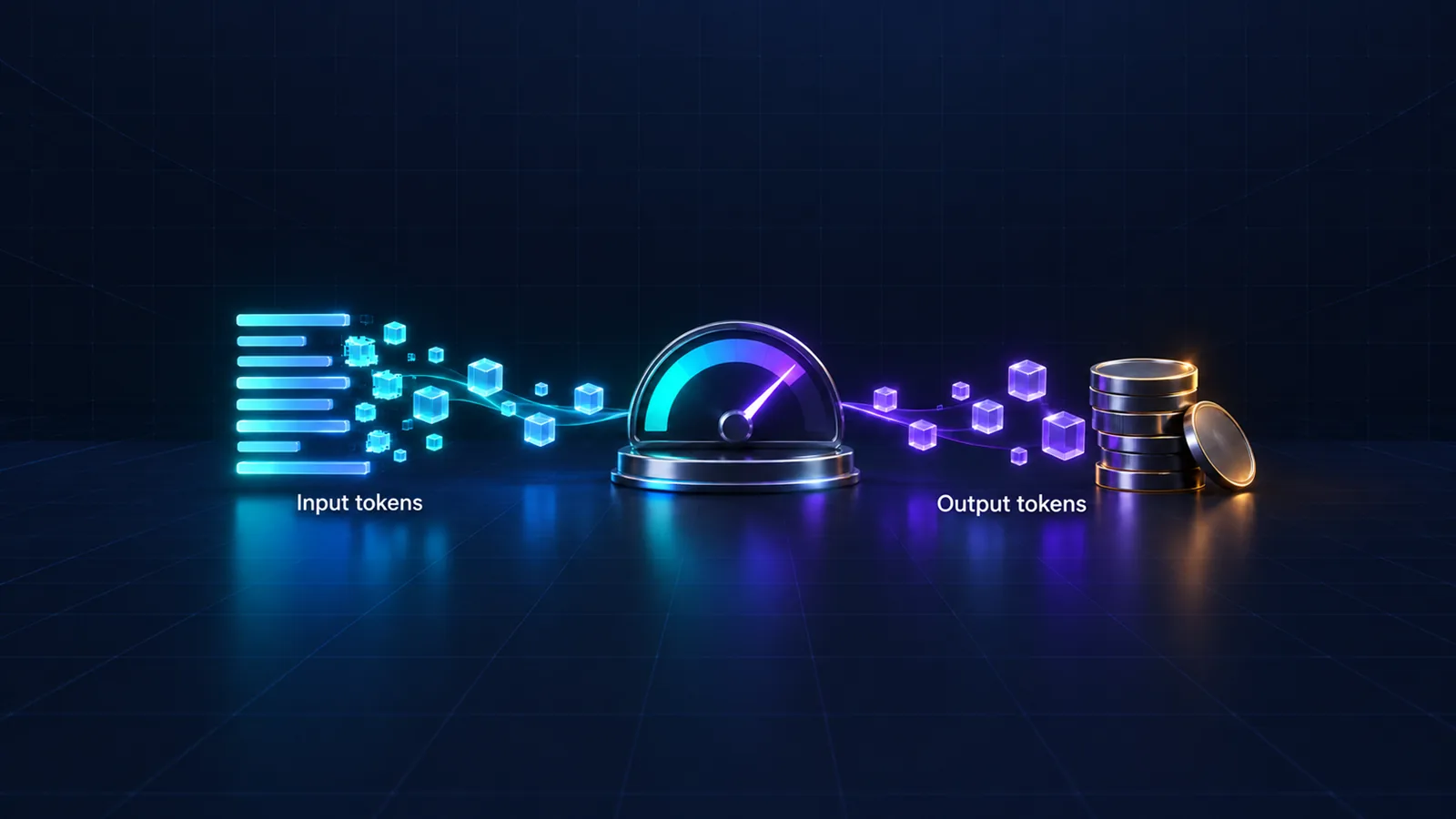
Every price on this AI leaderboard is a price per token. AI models are billed by the token, a chunk of text roughly three quarters of an English word long. Every provider prices input tokens (what you send) and output tokens (what the model writes) separately, and output usually costs several times more.
- Input tokens: your prompt, documents, instructions and chat history.
- Output tokens: the answer, plus any reasoning tokens a thinking model uses before it answers. Reasoning tokens are billed even though you do not see them.
- Cached input: repeated context, such as a long system prompt, can be billed at a much lower rate when the provider supports caching.
- Blended price: the single figure used in this AI leaderboard, three parts input to one part output, so models can be compared on one number.
- Cost per task: what a model actually spent on a job, which depends on price and on how many tokens it used.
A worked example
Suppose you send 1,000 requests, each with 3,000 input tokens and 1,000 output tokens. Here is what the same workload costs at list prices:
| Model | Intelligence | Input / output per 1M | Cost of 1,000 requests |
|---|---|---|---|
| Claude Opus 5.5 | 57.6 | $4 / $20 | $32.00 |
| Claude Sonnet 5.5 | 56.0 | $2 / $10 | $16.00 |
| MiMo-V2.6-Pro | 46.3 | $0.43 / $0.87 | $2.17 |
| GLM 5.3 Flash | 41.8 | $0.15 / $0.5 | $0.95 |
The gap between the most capable model and a good budget model can be ten times or more. Many teams route simple requests to a cheaper model and send only the hard ones to a frontier model.
Official flagship prices
We checked each lab’s own pricing page for its flagship model. Artificial Analysis prices matched the official pages for 49 of the 52 models we could compare; the other three show a regional or third-party host price, which we note in the methodology.
| Lab | Flagship model | Input per 1M | Output per 1M | Source |
|---|---|---|---|---|
| Anthropic | Claude Fable 5.1 | $10 | $50 | pricing page |
| OpenAI | GPT-6 Astra | $10 | $50 | pricing page |
| Gemini 3.8 Flash | $0.75 | $3.75 | pricing page | |
| SpaceXAI | Grok 4.7 | $2 | $6 | pricing page |
| Meta | Muse Spark 1.3 preview | $1.25 | $4.25 | pricing page |
| DeepSeek | DeepSeek-V4.1-Flash | $0.3 | $1.2 | pricing page |
| Alibaba | Qwen3.8-Max | $2 | $6 | pricing page |
| Moonshot AI | Kimi K3 | $3 | $15 | pricing page |
| Z.ai | GLM-5.3 | $1.4 | $4.4 | pricing page |
| MiniMax | MiniMax-M3 | $0.3 | $1.2 | pricing page |
| Mistral AI | Mistral Medium 3.5 | $1.5 | $7.5 | pricing page |
| Cohere | Command A+ | Free | Free | pricing page |
| Amazon | Amazon Nova 2 Pro (Preview) preview | $1.25 | $10 | pricing page |
| Microsoft | MAI-Thinking-1 preview | $2 | $8 | pricing page |
| AI21 Labs | Jamba Large 1.7 | $2 | $8 | pricing page |
| Upstage | Solar Pro 4 | $0.3 | $1.2 | pricing page |
| Motif Technologies | Motif 3 | $0.2 | $0.8 | pricing page |
| Sakana AI | Fugu Ultra v2.0 | $5 | $30 | pricing page |
| Xiaomi | MiMo-V2.6-Pro | $0.43 | $0.87 | pricing page |
| StepFun | Step 5 Preview preview | $1 | $2.7 | pricing page |
| Tencent | Hy4 preview preview | $0.83 | $2.5 | pricing page |
| Thinking Machines Lab | Inkling | $1 | $4.05 | pricing page |
| Apodex | Apodex 1.1 | $0.3 | $3 | pricing page |
| Multiverse Computing | Quasar 438B | $0.6 | $1.8 | pricing page |
Some labs publish no US dollar price per token for their flagship, or price only in another currency: NVIDIA, IBM, Sarvam AI, Technology Innovation Institute, G42 / Inception, MBZUAI Institute of Foundation Models, LG AI Research, Preferred Networks, SB Intuitions, NTT, Fujitsu, ELYZA, LLM-jp, Rakuten Group. For those, check the provider or the cloud platform that hosts the model.
How the tests behind this AI leaderboard work
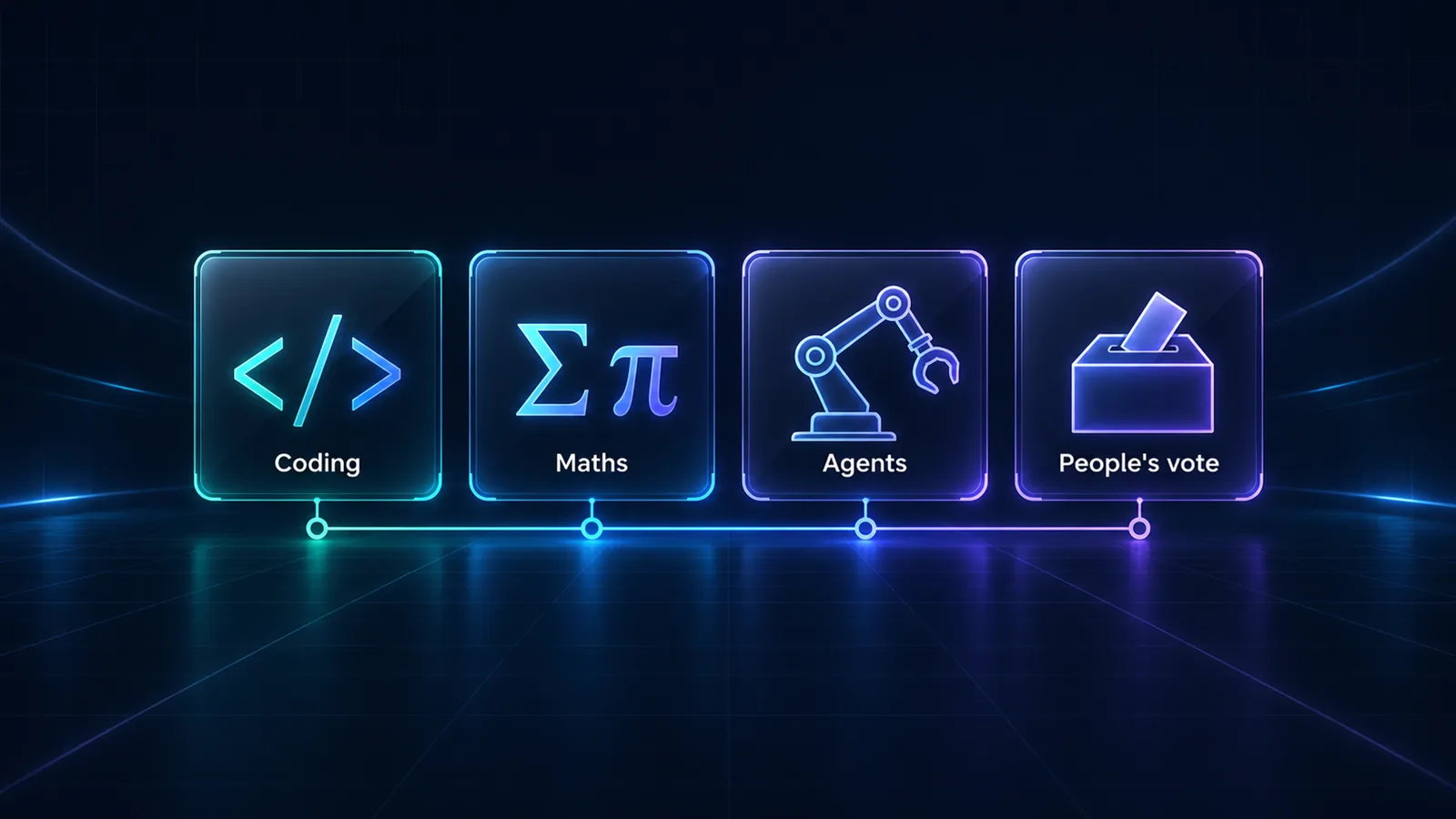
No single test tells you everything, so this AI leaderboard combines several. Each one is run the same way on every model, which is what makes the comparison fair.
- Artificial Analysis Intelligence Index: ten evaluations weighted by category: agents 30%, coding 20%, scientific reasoning 20% and general 30%. The methodology page labels the current version v4.3.2.
- Terminal-Bench 4.0: 66 hard tasks done in a real terminal, from software engineering to data processing. Artificial Analysis runs every model in the same simple agent (mini-swe-agent); the official board tests each maker’s own agent.
- GDPval-AA: real work tasks from 44 occupations, graded against each other and reported as an Elo score.
- AA-Briefcase: multi-week knowledge work projects with many linked tasks and thousands of source files.
- AutomationBench-AA: Zapier’s benchmark of realistic workflows across simulated business apps in finance, HR, marketing, operations, sales and support.
- GDP.pdf: 100 professional tasks grounded in 4,592 pages of real PDF documents.
- Humanity’s Last Exam: 2,158 hard text questions across mathematics, humanities and the natural sciences.
- AA-LCR: 100 questions that need reasoning across roughly 100,000 tokens of documents such as company reports and legal texts.
- AA-Omniscience: 6,000 questions across 42 topics that reward knowing an answer and penalise guessing. We rank Reliable knowledge on its Omniscience Index, because the raw non-hallucination rate favours small models that simply decline to answer.
- MMMU Pro: 1,730 visual reasoning questions across 30 academic subjects.
- LMArena: people compare two anonymous answers and vote for the better one. The score reflects preference, not correctness, and a model needs enough votes before it is ranked.
Why a test score is not the whole story
Benchmarks are useful but narrow. A model may have seen similar questions in training, a different agent or effort setting can move a score by several points, and a maker’s own results are often run in conditions that favour the model. That is why this AI leaderboard ranks on independent runs only, labels the maker’s figures when it shows them, and lets you see how much each result cost.
How to choose the right AI model for your work
- Write down the job. Reading contracts, writing code and answering customers are different skills. Pick the test that is closest.
- Set a budget per task, not per token. Estimate your monthly volume and use the worked example above as a template.
- Shortlist three models. Use the Compare boxes in the leaderboard to put them side by side.
- Test on your own sample. Twenty real examples with known answers will tell you more than any public score.
- Check the terms. Data retention, where requests are processed and whether you can opt out of training can rule a model out.
- Plan a fallback. Rate limits and outages happen, so keep a second model ready for important workflows.
Our tested prompt guides for accounting, Excel and finance are a good way to build that first test set.
How we build this AI leaderboard
- Sources: scores from Artificial Analysis, LMArena and the official Terminal-Bench board, fetched on 30 September 2026 and saved with their dates.
- One row per model: each model appears once, at the effort setting with its best Intelligence Index score. Other settings are one click away.
- Estimated scores: where Artificial Analysis estimates a score, the leaderboard marks it est.
- Missing tests: a model without a result on a test is not ranked on that test, and in a custom mix it is ranked after complete entries.
- Prices: list prices in US dollars from Artificial Analysis, cross-checked against the labs’ own pricing pages.
- Countries: the headquarters country of the lab that built the model.
- No paid placements: no lab pays to appear or to rank higher, and we do not use affiliate links on this page.
- Independent first: AI model rankings use independent runs only; the makers’ own figures appear only as labelled context.
AI leaderboard FAQ
What is an AI leaderboard?
Which AI model is the best right now?
Which AI model is best for coding?
What is the cheapest good AI model?
Which country leads in AI?
What is the best open-weights AI model?
Why are Claude Sonnet 5.5 and Claude Opus 5.5 missing from the Terminal-Bench board?
How is the Intelligence Index calculated?
Why do some models have no people's vote score?
What does blended price mean?
Are the companies' own benchmark claims included?
How often is this AI leaderboard updated?
Can I rank models by my own priorities?
Why do AI agents have cards instead of scores?
Is a higher score always better for my business?
What is the difference between an LLM leaderboard and an AI leaderboard?
Is this AI leaderboard free to use?
Which AI model is best for finance and accounting?
Does Gemini 4 Argon have a 1M output token limit?
Why is Gemini 4 Argon not ranked first on this AI leaderboard?
What does Gemini 4 Argon cost and who can use it?
Related guides
Our in-depth reviews of the models at the top of this AI leaderboard, plus practical guides for putting them to work:
Sources
- Artificial Analysis model leaderboard and Intelligence Index methodology: scores, prices, speed and test definitions.
- Artificial Analysis capability indexes: finance, legal, engineering, economics, strategy and healthcare scores.
- LMArena leaderboards: blind human preference votes for text and web development.
- Terminal-Bench 4.0 leaderboard: agent and model pairs on terminal tasks.
- Claude Sonnet 5.5 system card: Anthropic's own Terminal-Bench 4.0 results for Sonnet 5.5 and Opus 5.5.
- Google's Gemini 4 Argon launch, official performance table and evaluation methodology: the 1M output limit, announced prices, launch results and rollout plans.
- Google's official announcement thread and Google DeepMind's official thread: announcement and the official follow-ups about reasoning and phased access.
- GPT-6.1 Sol specs, GPT-6 Astra specs and Claude model specifications: the separate context and maximum-output limits for the comparison.
- Stanford HAI AI Index 2026: country figures for models, investment, patents and talent.
- Epoch AI data on AI models, US and China capability gap and compute ownership: frontier models and compute.
- OECD.AI data: foundation models by developer country.
- Each lab's official pricing and model pages, linked in the flagship price table above.